
Livestock farmers today have access to reproductive and genetic tools that dramatically accelerate improvement compared with traditional selection alone. Techniques such as artificial insemination, embryo technologies, genomic evaluation, and related methods allow wider use of superior genetics, shorter generation intervals, and more precise selection for traits that matter—milk yield, growth rate, fertility, disease resistance, feed efficiency, and climate resilience. Understanding and applying these approaches, alongside solid nutrition and health management, can raise productivity and long-term herd or flock performance.
Artificial Insemination: The Foundation of Genetic Progress
Artificial insemination remains the most widely adopted reproductive biotechnology in livestock. Semen collected from selected males is processed, evaluated for quality, and deposited into the female reproductive tract at the optimal time. A single superior sire can produce hundreds or thousands of offspring across many farms, far beyond the limits of natural service.
Fixed-time artificial insemination protocols synchronize estrus so groups of females can be bred on a predetermined schedule. When combined with good body condition and nutrition, these programs achieve high pregnancy rates in a short breeding window. Sexed semen further allows farmers to increase the proportion of heifer calves for herd expansion or male calves for beef production. Cryopreserved semen can be stored long-term and transported globally, reducing the need to move live animals and lowering disease-transmission risk.
Successful AI depends on accurate timing, proper technique, semen quality, and female fertility. It integrates well with other technologies and forms the base of most modern breeding programs in cattle, pigs, sheep, goats, and other species.
Embryo Transfer and In Vitro Embryo Production
Embryo technologies multiply the contribution of genetically elite females. In conventional embryo transfer, superior donors are superovulated, bred, and the resulting embryos recovered and transferred to recipient females that carry the pregnancies. This spreads the genetics of outstanding cows, ewes, or does more rapidly than natural reproduction allows.
In vitro production has grown substantially and now accounts for the majority of embryos produced and transferred in many regions. Oocytes are recovered from donors (often by ovum pick-up), matured and fertilized in the laboratory, cultured to transferable stage, and then transferred or frozen. This approach can generate more embryos per donor and works with a wider range of females. Global data show steady increases in embryo production and transfer, driven largely by laboratory-based methods.
These techniques shorten the time needed to disseminate high-value genetics and support conservation of valuable bloodlines through embryo freezing and germplasm banks. They require skilled technicians, proper recipient management, and attention to embryo quality for best results.
Genomic Selection: Predicting Merit from DNA
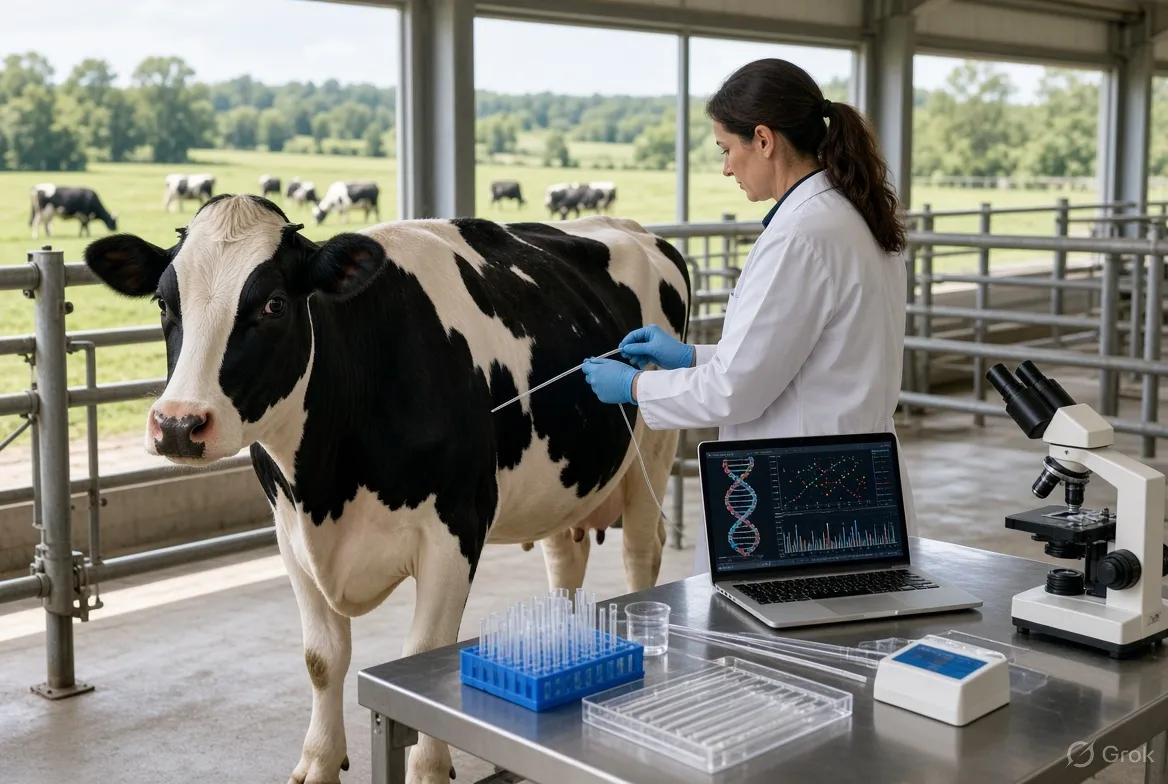
Genomic selection uses dense panels of genetic markers across the genome to estimate an animal’s breeding value early in life. Young animals can be genotyped and ranked for complex traits—milk production, growth, carcass quality, fertility, longevity, disease resistance, and feed efficiency—without waiting years for progeny performance records.
This raises the accuracy of selection decisions, especially for traits that are difficult or expensive to measure on every candidate. It also shortens generation intervals because promising animals can be identified and used for breeding much sooner. When combined with artificial insemination and embryo technologies, genomic information accelerates the overall rate of genetic gain in the herd or flock.
Genomic tools are already routine in many dairy and beef cattle programs and are expanding in other species. Reference populations with reliable phenotypic data remain important for accurate predictions, and farmers benefit most when genomic results are interpreted alongside traditional performance and pedigree information.
Supporting Technologies and Practical Integration
Cryopreservation of semen and embryos enables long-term storage and the creation of genetic resource banks. These banks protect valuable genetics against loss from disease, natural disasters, or other events and provide material for future breeding or recovery programs.
Emerging gene-editing approaches, such as CRISPR-based methods, are being researched to introduce specific traits—for example, heat tolerance through coat characteristics. While still largely experimental and subject to regulatory frameworks, they illustrate the direction of precision breeding.
No single technique succeeds in isolation. High pregnancy rates and genetic progress require adequate nutrition, health programs, proper facilities, and skilled labor. Body condition, energy balance, and disease control strongly influence the success of any reproductive technology. Combining fixed-time AI with bull follow-up, or pairing genomic rankings with embryo production from top females, multiplies benefits.
Practical Steps for Farmers
Farmers can begin with artificial insemination using proven sires matched to herd goals. Synchronization protocols and reliable heat detection or fixed-time systems improve consistency. For operations seeking faster female-side progress, exploring embryo transfer or in vitro services with reputable providers is a logical next step. Genomic testing of replacement candidates helps prioritize the best animals for breeding or sale.
Record-keeping remains essential. Tracking parentage, performance, health events, and reproductive outcomes allows evaluation of which genetics and techniques deliver results under local conditions. Working with breed associations, artificial-insemination organizations, and veterinary or extension specialists provides access to quality genetics, technical support, and updated protocols.
Looking Ahead
Modern breeding techniques give livestock producers powerful tools to improve productivity, efficiency, and resilience. Artificial insemination spreads elite male genetics widely. Embryo technologies amplify superior female contributions. Genomic selection enables earlier, more accurate decisions. When these methods are applied thoughtfully within a well-managed production system, genetic progress accelerates and economic returns improve. Continuous attention to animal health, nutrition, and welfare ensures that technological advances translate into practical, sustainable gains on the farm.
Read more- marathimeanings.com
